Hundreds of parcels a month change what a box is allowed to cost.
Bekelu looks closely at what happens after the checkout button is pressed, when packaging stops being a marketing slide and becomes a monthly invoice measured in thousands of pieces. We set compostable mailers against ordinary poly bags using bulk pricing gathered from European suppliers, we examine cushioning materials that stand in for bubble wrap, and we read through published Czech consumer research to see whether shoppers notice the difference. Nothing on this site is for sale. Every figure is here for comparison, not persuasion.
A slower way to look at a fast-moving decision
Somewhere between the fulfilment shelf and the courier van, a decision gets made hundreds of times a day about which bag or box a product travels in, and in most Czech warehouses that decision was set once, months or years ago, and has rarely been revisited since. The material sitting inside that decision, usually a low-density polyethylene mailer bought by the pallet, was chosen for a reason that made sense at the time. It was inexpensive, it was stocked by nearly every European converter, and nobody in the business was asking hard questions about what happened to it after a customer cut it open with scissors. This publication exists because those questions are being asked now, by customers filling in post-purchase surveys, by staff who read the same headlines everyone else reads, and by finance teams who have noticed that bulk pricing on compostable film has quietly become less exotic than it was a few years ago. We are not trying to settle the question for anyone reading this. We are trying to place the numbers, the material science and the survey data next to each other so a packaging decision can be revisited with the same care it probably received the first time.
Every comparison published here draws on publicly available price lists and quotations from European paper and bioplastics converters, on material data sheets and compostability certifications such as EN 13432, and on consumer research already published by Czech and European market bodies rather than anything commissioned for this site. Where a figure appears as a range instead of a single number, that is because bulk pricing genuinely shifts with print complexity, minimum order quantity, and how many colours a converter has to run through a press. We would rather show that variability honestly than round it away for the sake of a tidy headline. Bekelu does not manufacture, import or sell packaging materials of any kind, and this page will not try to convince anyone otherwise. The site functions as an editorial reference for teams doing their own procurement research, nothing more and nothing less.
What teams shipping hundreds of parcels keep asking us
What does compostable actually cost in bulk?
A per-piece look at compostable mailers against standard poly bags once minimum order quantities and European freight are accounted for.
Can paper cushioning survive a courier network?
Honeycomb wrap, molded pulp and crumpled kraft, considered against the impact forces a parcel actually meets on the road.
Is printed paper tape durable enough to brand?
How water-activated gummed tape compares with printed vinyl, and what a short print run costs to set up.
Do Czech customers care, or is this an internal story?
Reading published consumer surveys on unboxing experience next to stated environmental concern.
Compostable mailers against standard poly bags, in CZK
The figures below are gathered from public price lists and quotations published by European paper and bioplastics converters for bulk orders typically requested by businesses shipping several hundred parcels a month. Prices move with print complexity and minimum order size, so treat every number as an illustrative range rather than a fixed quote.
| Format | Typical size | Bulk price per piece | Common minimum order | Note |
|---|---|---|---|---|
| Standard poly mailer (LDPE) | 250 × 350 mm | 1.80 – 2.40 CZK | 10,000 pcs | Unprinted, single layer film |
| Compostable mailer (PBAT/PLA blend) | 250 × 350 mm | 3.90 – 5.60 CZK | 10,000 pcs | EN 13432 certified, unprinted |
| Padded paper mailer (kraft + honeycomb liner) | 250 × 350 mm | 4.20 – 6.80 CZK | 2,000 pcs | Padding density affects the range |
| Recycled kraft mailer, unpadded | 250 × 350 mm | 2.90 – 3.70 CZK | 5,000 pcs | Suits soft, non-fragile goods |
At order volumes under roughly one thousand units a month, several converters we reviewed quote noticeably higher per-piece rates across every format above, which changes the arithmetic considerably for smaller shops. Freight from EU-based converters to a Czech warehouse is usually charged separately and is worth requesting as a landed price rather than an ex-works figure, since pallet counts and volumetric weight differ meaningfully between film and paper formats.
Cushioning that doesn't rely on plastic bubbles
Bubble wrap works by trapping air in small sealed cells that compress and spring back under impact. Paper-based alternatives protect through a different mechanism entirely, absorbing energy as the material itself folds, crushes or collapses, which changes how they need to be specified rather than whether they can do the job.
Honeycomb kraft wrap
Expanded from a flat sheet into a cellular structure on delivery, it cushions through structured collapse rather than trapped air. Priced roughly at 11 to 17 CZK per square metre in bulk, slightly above standard bubble film per square metre.
Molded pulp trays and corners
Formed from recycled fibre into a shape that matches the product, stock trays run around 2.50 to 4 CZK per unit, while custom tooling for a bespoke shape is often quoted separately as a one-time setup cost.
Crumpled kraft void-fill
Fed through a small in-house crumpling machine, plain kraft paper by weight is often quoted around 55 to 80 CZK per kilogram, with one kilogram typically filling a meaningful volume of void space in a standard mailer box.
Corrugated fluted inserts
Die-cut corrugated board folded into ribs or dividers, well suited to flat or rigid items such as books, cosmetics sets or small electronics that need separation rather than surrounding cushioning.
Printing a brand onto paper tape instead of vinyl
Most printed parcel tape sold in the Czech Republic is a BOPP film, a thin biaxially oriented polypropylene coated with a pressure-sensitive adhesive, and it is what nearly every branded roll on a fulfilment bench has been for the last two decades. The paper alternative, a water-activated gummed kraft tape, uses a starch-based adhesive that is moistened before application rather than pressed on, and it bonds to a cardboard box fibre to fibre rather than sitting on top of it. That bond is part of why recycling facilities can process a box sealed with paper tape without removing it first, whereas plastic tape is routinely picked out or shredded as contamination during the pulping stage.
Printing onto either material follows a similar path technically, usually flexographic plate printing for longer runs and digital print for shorter ones, but the economics differ. Paper tape print runs tend to carry a higher per-roll cost than vinyl because the base material itself is pricier and press speeds on paper are typically slower than on smooth film. A one-time plate or cylinder setup for a single-colour logo is often quoted in the range of 3,500 to 8,000 CZK depending on the converter and the number of colours involved, a cost that is amortised across the whole run rather than charged per roll.
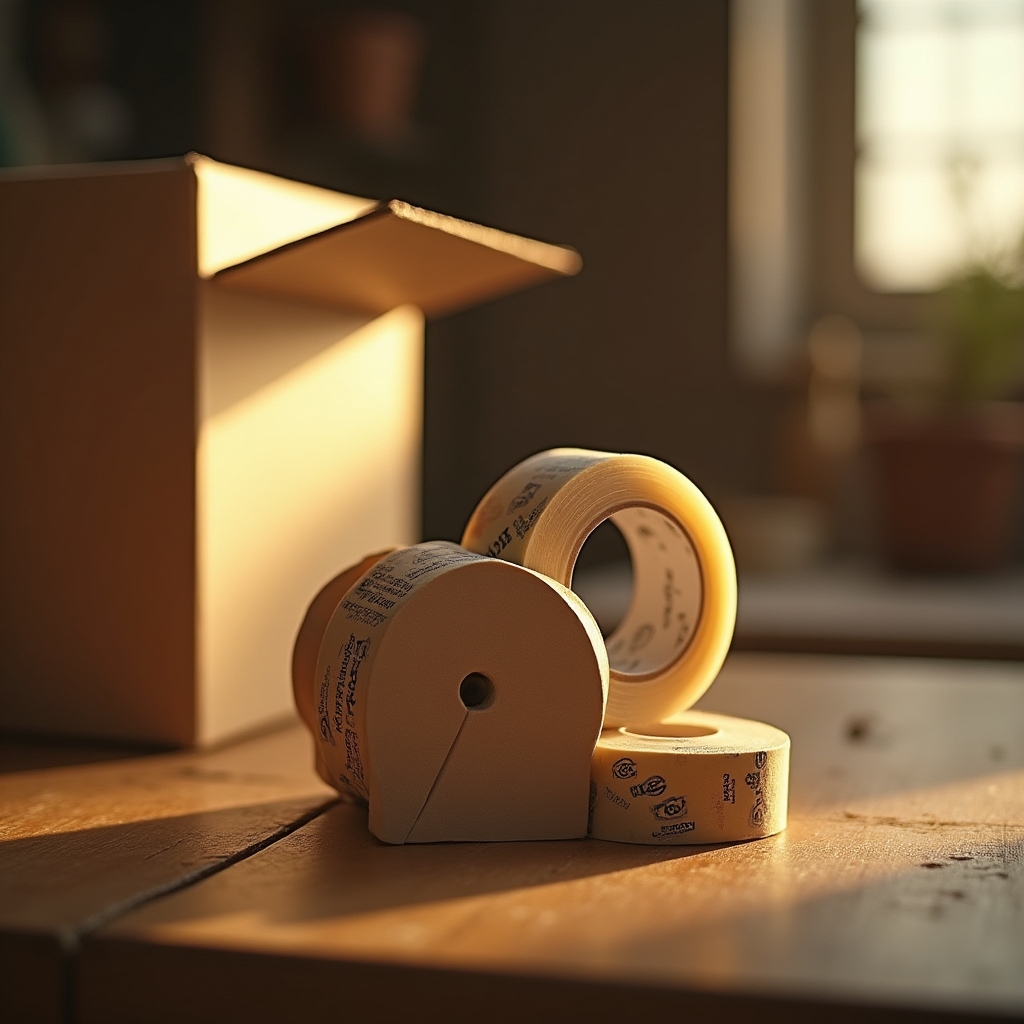
| Tape type | Bulk price per roll |
|---|---|
| Vinyl (BOPP), unprinted | 6 – 9 CZK |
| Vinyl (BOPP), printed | 11 – 16 CZK |
| Paper (kraft, gummed), unprinted | 9 – 13 CZK |
| Paper (kraft, gummed), printed | 14 – 22 CZK |
50mm × 66m roll, indicative bulk pricing, excludes plate setup
What Czech shoppers report about unboxing and the environment
Several published surveys on Czech and wider European online shopping habits describe a pattern rather than a single tidy number: customers tend to notice packaging most when something feels obviously excessive, a small item arriving inside a box built for something twice its size, and they tend to describe paper-based packaging as feeling more considered even when they cannot fully articulate why. Researchers studying unboxing behaviour more broadly have pointed to tactile qualities, the sound a material makes, the way it folds, as carrying more weight in a customer's immediate impression than any printed statement about sustainability ever does. That does not mean the environmental angle is invisible. It tends to surface later, in post-purchase surveys and reviews, as a secondary factor that reinforces satisfaction rather than one that drives the initial purchase decision on its own.
This gap between stated concern and observed behaviour is well documented in sustainability research generally and is often referred to as an intention-action gap: people report caring about environmental impact in surveys at a level that does not always match what they choose at checkout when price or convenience is also on the table. For teams shipping hundreds of parcels a month, that nuance matters more than a headline claim about customer demand, because it suggests packaging changes are read by shoppers as a signal of overall care rather than as the single reason they bought something in the first place. Consumer bodies and academic researchers publishing in this area in the Czech Republic and across the EU have tended to agree on that broad shape of the finding, even where the specific wording of their surveys differs.
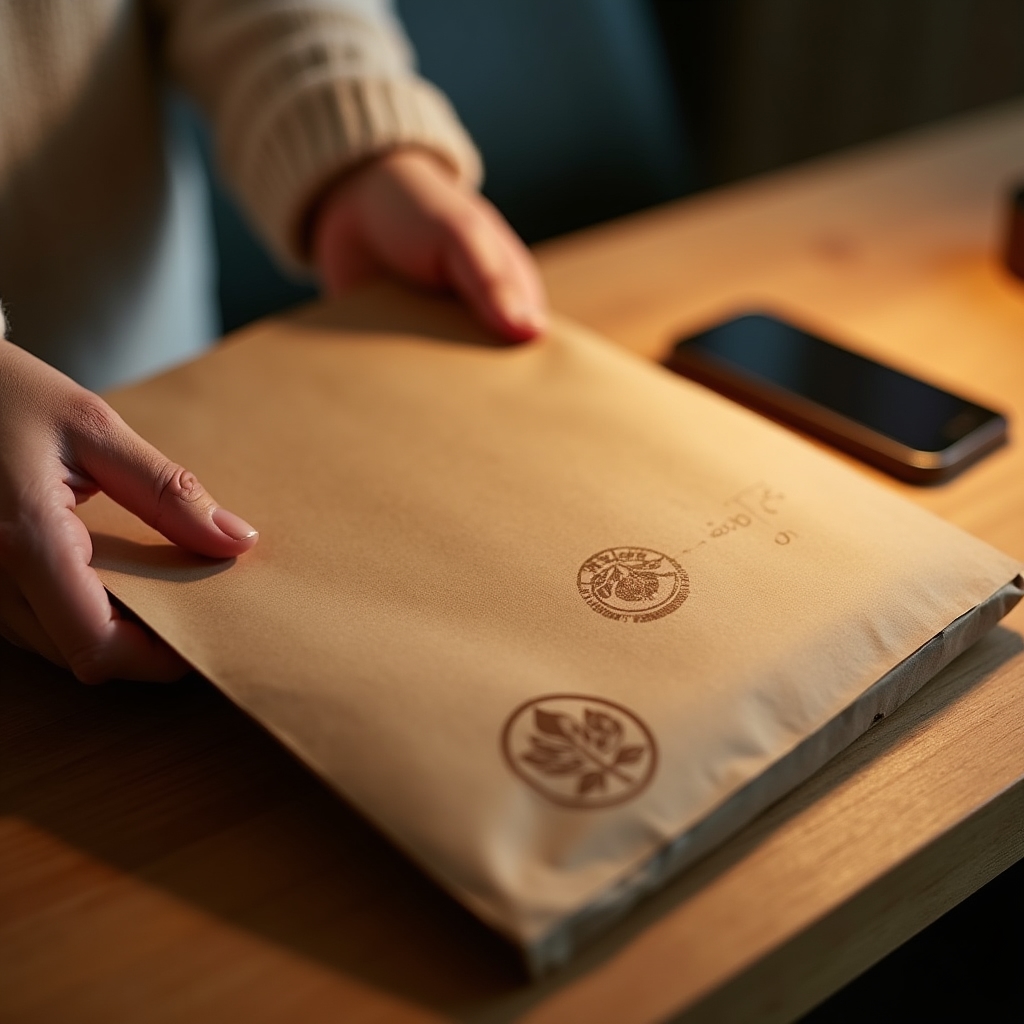
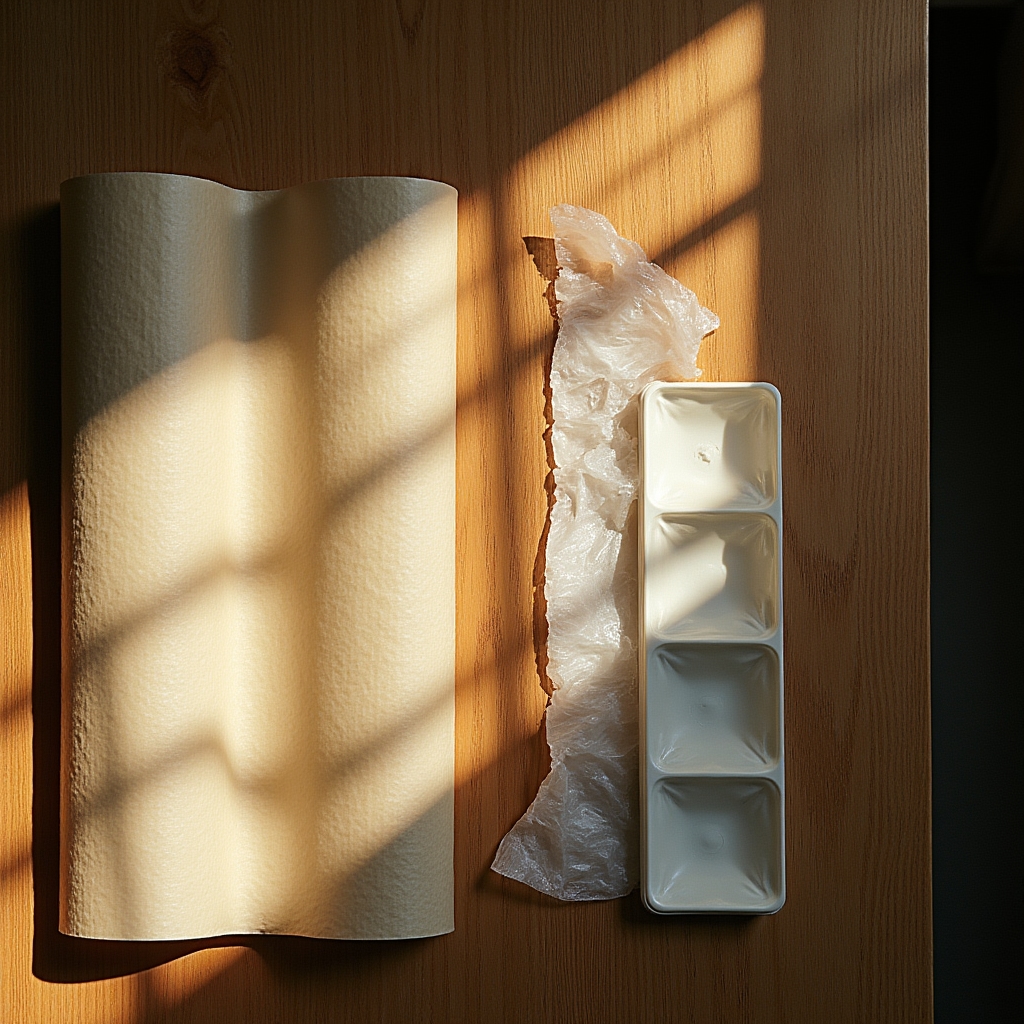
A quick look at the materials in practice




Where to go next on this site
Who Benefits Most
Which business profiles the volume economics of this switch tend to favour, and which do not yet benefit.
02 / Material scienceTechnical Deep Dives
Certifications, adhesive chemistry and the physics behind why some cushioning works and some does not.
03 / By sectorBrowse by Industry
Packaging considerations for fashion, beauty, food subscriptions, electronics and printed media.
04 / Get in touchContact
Questions about the research, corrections, or an editorial inquiry about a specific comparison.